Greenville Tree Removal Team has handled tree removal in Simpsonville for more than twenty years, and the first thing worth saying about this city is that it does not regulate your tree. It regulates what your tree becomes once it is on the ground. The document a Simpsonville homeowner actually meets is a solid waste policy, not a tree ordinance.
That policy draws one line, and the line is a dimension. Loose brush set at the curb must stay under six inches in diameter and six feet in length, and Greenville County uses the identical geometry at the landfill gate to decide what your load is priced as. Six inches is almost exactly where a pruning job ends and a removal begins.
So we quote a Simpsonville removal with the disposal route already settled: which gate the load is legally allowed to enter, what that gate charges, and what leaves your property with us. The trunk rounds, the stump, the grindings and the chips are named in the written estimate before a saw starts.
What Simpsonville Public Works will collect, and the sentence where it stops
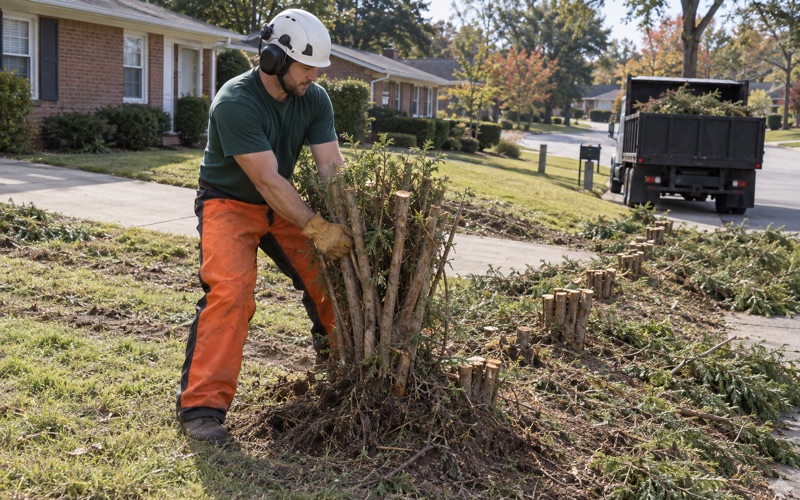
The City of Simpsonville publishes a Solid Waste Management Policy, and it describes curbside brush collection in unusually specific terms. Loose brush must not exceed six inches in diameter nor six feet in length. Volume is capped too: brush removal is limited to two cubic yards per pickup, roughly one pickup truck load, and the policy warns that there is no set schedule for collection.
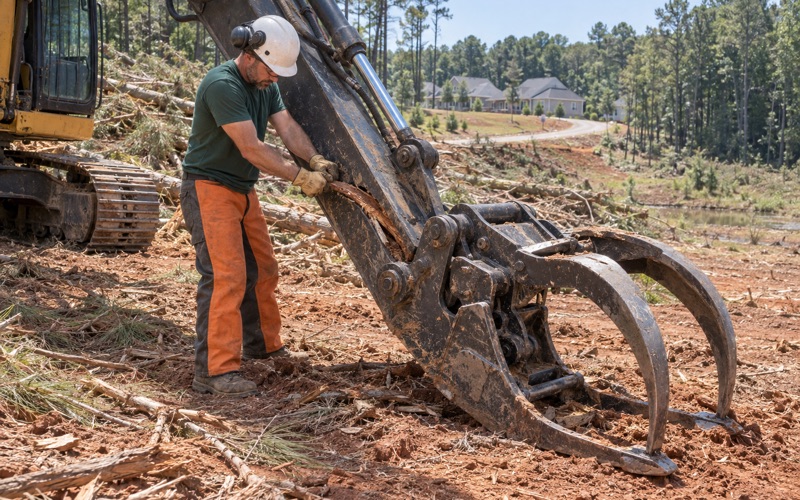
A single mature removal produces many times two cubic yards, which is where the policy’s second rule takes over. Public Works collects loose brush from residential properties only, and it does not collect materials generated by contractors. The policy expands that: commercial contractors, landscapers and other entities hired by residents to landscape their yards, cut their trees and limbs, work on their house or provide land-clearing services are responsible for removing the debris and yard waste they generate.
The line that names where the wood goes
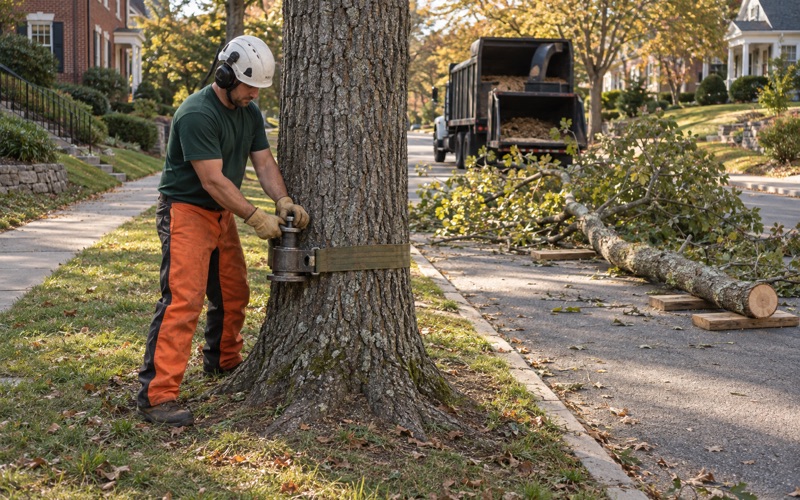
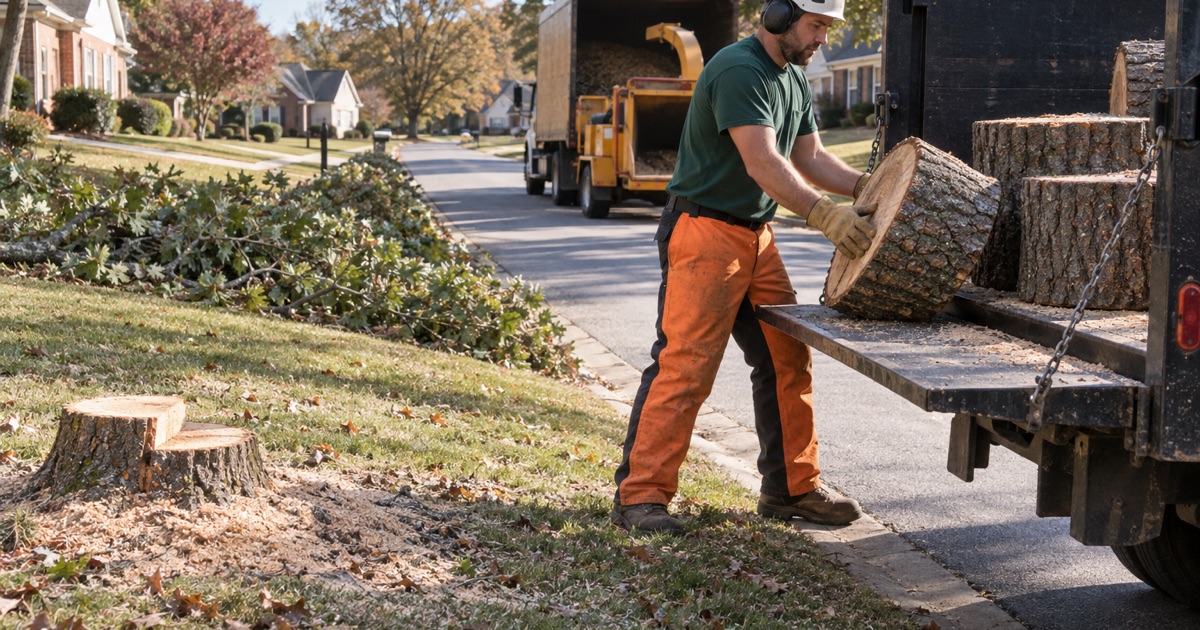
Most municipal policies stop at the refusal. Simpsonville goes one step further and routes the material: abnormal quantities of trimmings, lot clearings and tree or stump removals shall be transported to the landfill by the homeowner or contractor. That single sentence is why a Simpsonville estimate has to carry a haul line at all: the city has already decided the wood is leaving by truck, and the only question left is whose truck and which gate.
Bagged material follows its own rule and is not a workaround for a removal. Leaves, pine needles, hedge clippings and grass clippings must be bagged, kept separate from other yard debris, and held under twenty-five pounds per bag; that material is collected weekly. None of it describes a trunk.
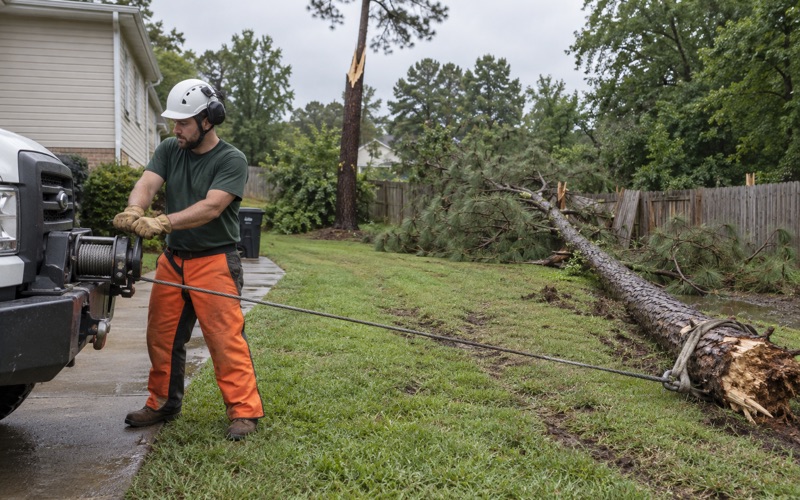
We tell Simpsonville homeowners this before the quote rather than after the crew leaves, because the pile in the driveway is the part of the job people assume the city will absorb. It will not, and the policy says so in its own words. Hauling is ours from the first cut, and it is priced that way.
Looking for tree-removal closer to Travelers Rest? See Travelers Rest Tree-Removal.
Six inches and six feet: the number the city and the county both use
Greenville County Solid Waste Division prices disposal by category, and its rate sheet effective July 01, 2025 defines yard and brush waste using the same geometry the city uses at the curb: loose leaves, grass clippings and tree or branch trimmings under six inches in diameter and less than six feet long, at $5.00 per cubic yard. The note underneath is the one that matters to a removal. Yard and brush waste exceeding six inches in diameter, more than six feet long, or containing bags or other contaminants is classified as Construction/Demolition Waste.
Construction and demolition waste is priced on that same sheet at $5.00 per cubic yard light, or as much as $15.00 per cubic yard when the load is dense. A load of trunk wood is dense. So the identical dimension that decides whether the city touches your brush also decides whether your contractor pays five dollars a yard or fifteen at the gate, and a removal, by definition, produces material on the wrong side of it.
Stumps, root mats and the separated load
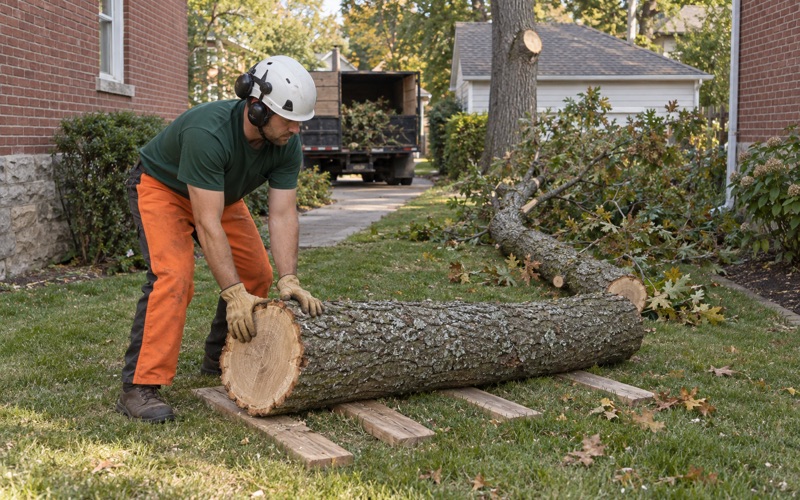
The county’s acceptable waste category, billed at $32.50 per ton, expressly lists logs greater than six inches in diameter or six feet in length, tree stumps, root mats and vegetation, sitting in the same priced list as bricks, concrete, hardened asphalt and shingles. That is what a stump grinding and a takedown actually generate, and it is not yard waste in the county’s accounting.
Yard, brush and cellulosic waste is also designated a controlled material, which carries a penalty rather than a price. Anyone depositing a load at a Greenville County solid waste facility without first separating the controlled materials is assessed an additional fee of $150.00 per ton. Separating brush from trunk wood and grindings on site is therefore a pricing decision, not housekeeping, and our crews load Simpsonville jobs that way from the start.
Where a removal’s wood goes, and the Hipps Road limit
Greenville County operates a Residential Waste and Recycling Center at 517 Hipps Road, inside Simpsonville, and it is close enough that neighboring municipalities send their own residents to it. It is a residential facility, with its own ceiling: the residential centers will not accept quantities greater than three cubic yards per person, per day. A homeowner clearing storm limbs can use it. A tree service working that same address cannot.
Greenville County Solid Waste is explicit about the other route: all commercial haulers disposing at a Greenville County facility must use the Twin Chimneys Landfill, at 11075 Augusta Road in Honea Path. So the homeowner’s gate and the contractor’s gate are physically different places, and one of them is in town while the other is a loaded round trip away. The two routes diverge at the property line, and the drive is part of what a removal costs here.
What we put in the estimate
Because disposal here is priced by the gate rather than by the yard in your driveway, we write the inclusions down before the work starts: the trunk rounds, the stump, the grindings and the chips, and who ends up with each of them. We have been pricing Upstate disposal for more than twenty years across five counties, where one gate charges by the cubic yard, the next by the ton, and two of them are free only to their own residents. Quoting a Simpsonville removal without naming the destination is how a bill grows after the fact.
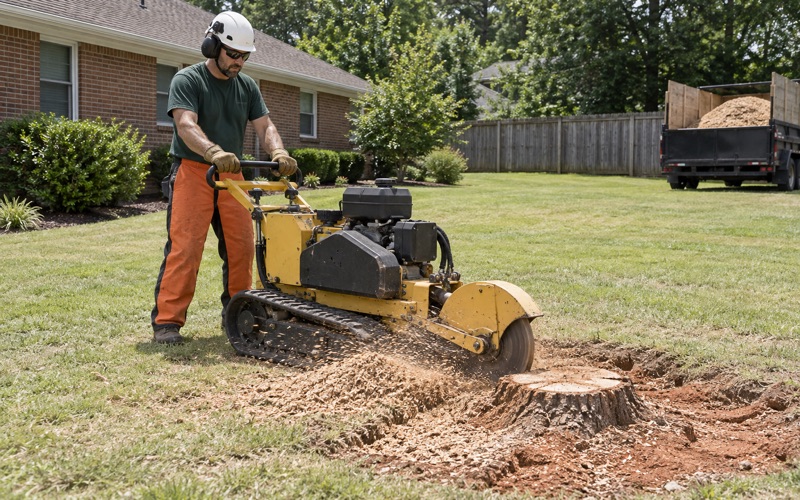
Access decides the rest of the price. Compact tracked equipment gets through a back-yard gate on a Simpsonville subdivision lot, which keeps a routine takedown from becoming a crane job, and a tracked stump grinder reaches roughly twelve to twenty-five inches below grade. The Cecil, Pacolet and Madison soils under the Southern Outer Piedmont run well past sixty inches to bedrock, so depth is never the limit; grit and slope are. Quartz in the profile wears teeth, and Pacolet is commonly mapped on fifteen to twenty-five percent slopes, which is what actually governs where a machine can be set.
What Simpsonville does not put in its regulations, and what still decides the job
No tree article in the Land Development Regulations
The city’s Land Development Regulations, in the edition amended by Simpsonville City Council in October 2024, run eleven articles: general provisions, definitions, preliminary plat, summary and record plat, final plat, performance bonds, water supply and sewage disposal, road classification and design, traffic control islands, construction standards and general subdivision design standards. There is no tree-protection or tree-preservation article among them, and the only vegetation item in the document is an acceptable plant materials list. We checked the earlier edition as well, so this is not a superseded document reading oddly.
That is a narrower statement than it sounds, and we make it carefully. Landscaping and buffer standards commonly live in a separate zoning ordinance, and we read the code for the city and the county a tree actually stands in before quoting, because this service area crosses five counties and the answer changes at the line. What we can say is established: the regulations covering subdivision and site development carry no tree article, and no Simpsonville permit requirement surfaced for taking a tree off a finished private lot.
South Carolina issues no arborist or tree-contractor license, and none is required to cut trees for money here, so we do not describe ourselves as licensed. The credential the state does recognize in a timber dispute belongs to a registered forester, and the Forestry Commission’s advice to homeowners is to ask for the certificate of insurance and verify it by telephone with the carrier. We would rather you did that than take a word on a truck door.
The covenant that can outrank the code
Where a Simpsonville removal does meet a written rule, it is usually a subdivision covenant rather than a city one. Housing here is weighted toward the subdivision decades: 45.1 percent of the stock was built between 1980 and 2009, much of it in neighborhoods that came with architectural controls, and a covenant restricting removal is a live question on a large share of addresses. It is also a checkable one: South Carolina Code Section 27-30-130 makes a homeowners association’s governing documents unenforceable unless they are recorded with the county register of deeds, and requires rules to be re-recorded by January tenth each year.
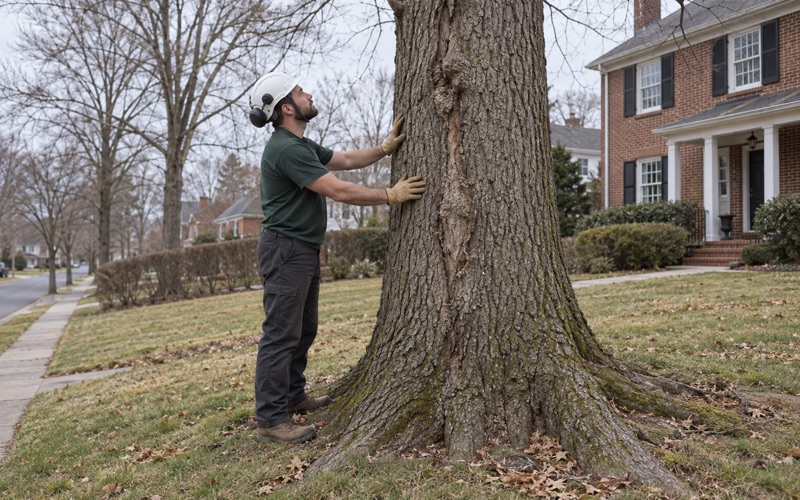
That is worth knowing before an association tells a homeowner a tree cannot come down. We provide written tree condition reports a homeowner can hand to an architectural review committee, an insurance adjuster or a neighbor, and we will say plainly when a tree can be cabled, braced or reduced instead of removed, and what each of those costs. Pruning we do is worked to the objectives and cut types in the ANSI A300 standard, and we do not top trees.
Storm damage and the $500 debris-removal allowance
The South Carolina Department of Insurance said it plainly in a media release dated October 5, 2015: some homeowners policies provide up to $500 in coverage for tree removal, and that limit applies to all of the downed trees per loss, not per tree. Removal of a tree off a damaged structure is handled under the dwelling portion of the policy instead, and a tree on a car is covered only where the auto policy carries comprehensive coverage.
After the September 2024 hurricane reached the Upstate, Greenville County collected 710,000 cubic yards of storm debris, which is a useful measure of how quickly a disposal route becomes the constraint rather than the cutting. We plan storm response around what this county actually recorded, and we give a straight answer on whether a job is worth an insurance claim before you file one. Estimates are free, and the answer is sometimes no.
- 20+ Years in the Upstate
- Free Estimates
- Written Tree Condition Reports