Tree limb removal is the job Greenville Tree Removal Team is called out for more than any other, and it is rarely about the tree as a whole. It is one limb over a roof, one dead scaffold above a driveway, or a row of branches reaching across a boundary into somebody else’s yard. Each of those is a different problem and only one of them involves a conversation with a neighbor.
What they share is that the wrong cut costs more than the right one. Take a limb at the trunk when a reduction would have done, and you leave a large wound on a mature stem. Take everything on one side back to a fence line in one afternoon, and the tree you were being careful about goes into decline anyway.
So we write down what is being cut before anyone starts: which limbs, where the cuts fall, what the tree looks like afterwards, and where the debris goes. On a boundary job that document does a second job entirely, because it is the thing both households can look at instead of arguing about what was agreed.
Limbs That Cross a Property Line
Cutting Back to the Boundary Without Killing the Tree
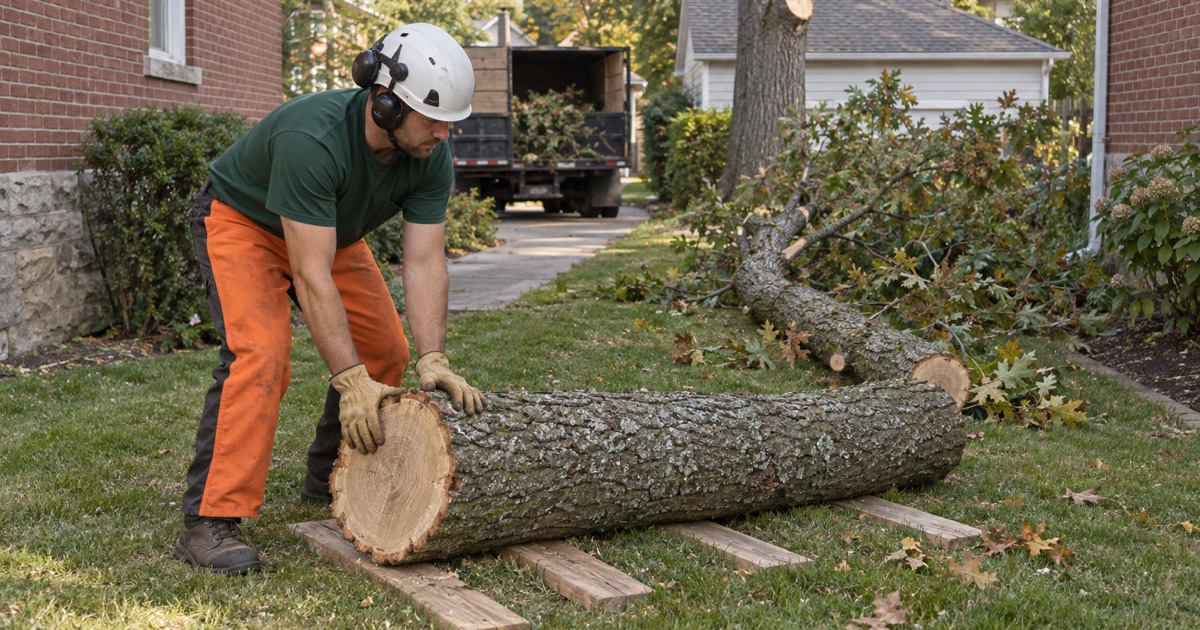
A reduction to the line is not a hedge trim: each limb comes back to a live lateral large enough to take over, and the volume is staged where it is significant. Removing a large share of a mature tree’s live crown in one pass is what turns a boundary tidy-up into a dead tree and a much harder conversation. We assess how much the tree can carry, do that much, and come back for the rest if there is more.
Putting a Defect on the Record
Where the concern is not overhang but a tree you believe is genuinely dangerous, the useful move is a dated written record rather than a phone call. South Carolina frames falling-tree liability around act of God and negligence, and what an owner knew, and when, is what separates the two. We write a tree condition report naming the defect, the target beneath it and the assessed risk, and it is written to be handed over.
Where We Stop
We work to the boundary and not past it, and we say so on the estimate. South Carolina Code Section 16-11-615 provides treble damages for trees cut without the owner’s consent, with value established by a registered forester, so an accidental foot over the line is an expensive kind of accident. Where the line itself is uncertain, we ask for the survey rather than making a judgment call with a saw.
Limbs Over a Roof, a Drive or a Pool
Clearing a Roofline and Gutter Run
Branches resting on shingles wear the surface, trap moisture against it and carry squirrels straight to the eaves, and the leaf load in the gutters is its own annual bill. The right treatment is normally a reduction of the offending limbs rather than removing them at the trunk, which would leave a large wound and pull the crown out of balance. We set the clearance to survive several seasons of growth.
Limbs Over Vehicles and Walkways
A long horizontal limb over a parking spot is a leverage problem: the further out the weight sits, the more the union has to hold in wind and ice. Shortening it back to a live lateral takes the load off the attachment without taking the limb. Where a target sits under a limb every night, that changes the assessment considerably from the same limb over an empty corner of lawn.
Pools, Decks and Ongoing Debris
Around a pool the complaint is usually maintenance rather than safety, and there the honest answer is often that pruning will not fix it. A crown reduction reduces leaf and flower drop but does not stop it, and thinning the interior hard to chase debris does real damage. We will tell you when the choice is genuinely between living with the debris and removing the tree.
Deadwood, Hangers and Broken Limbs
Deadwooding a Mature Canopy
Deadwood falls on a calm day as readily as a windy one, and it is what most people are actually looking at when they call. Removing it clears the immediate hazard and gives an honest read on how much of the canopy is still working. A tree shedding significant dead limbs from the same side year after year is telling you something a single visit will not resolve.
Hangers After a Storm
A broken limb caught in the canopy is held by chance and releases without warning, which makes it emergency work rather than a line on a scheduled quote. It is also awkward work, because the piece has to be brought down under control rather than pushed. Nobody should be underneath it in the meantime, including whoever is deciding what to do about it.
Limbs Near Service Drops and Communications Lines
Where the limb sits over the drop from the pole to your meter, the sequence changes: we confirm which provider serves the address and arrange a disconnect before a crew works. Phone, cable and fiber lines are not energized and are still not ours to cut. Work near energized conductors follows the ANSI Z133 safety requirements, including the weather conditions that stop it outright.
Doing It So the Tree Recovers
Cut Types That Actually Close
The ANSI A300 pruning standard defines the cut types and where they fall, and the difference between a proper reduction cut and a stub is the difference between a wound that closes and one that admits decay for a decade. Flush cuts remove the tissue the tree needs to seal, and topping cuts leave nothing to take over the terminal role. Neither appears on our estimates.
How Much to Take, and When
Mature trees tolerate far less removal at once than young ones, and the tolerance drops further on anything already stressed. Where a large change is genuinely wanted, spreading it over two or three seasons gets there without pushing the tree into decline. Dead wood is the exception and can come out at any time of year, in any quantity.
What Happens to the Brush
Contractor-cut brush is excluded from municipal collection almost everywhere in this service area, and most programs stop at six inches in diameter regardless of who cut it. That means the pile leaves on our trucks, and the disposal is priced against the gate the job actually goes to rather than against a regional average. It is a line on the estimate rather than an assumption.
- 20+ Years in the Upstate
- Free Estimates
- Written Tree Condition Reports