Greenville Tree Removal Team has been doing tree removal in Piedmont for more than twenty years, and the first thing we settle on a job here is which county the trunk is standing in. This community sits on both sides of a county line, and the two counties do not measure removal wood the same way. The cutting is the same either side of the water; the disposal is not.
That single fact drives most of what we do differently on a Piedmont removal. We price the takedown and the haul-off as separate lines, because the haul-off is the part that changes with the address, and we tell you which gate the wood is going to before we start loading it.
We give free estimates on both sides of the line, and we will tell you when a tree can be cabled, braced or pruned instead of taken down, and what each of those costs. The rest of this page is the practical version: how the two county gates measure the same trunk, what the old village lots and the manufactured-home pads do to access, and who issues a rule in a place with no city hall to call.
One village, two counties, and the Saluda River between them
Piedmont is a census designated place on the Saluda River, and the river is also the county line. Census geocoding puts one point in the community in Anderson County, in Census Tract 102, and a second point about half a mile away in Greenville County, in Census Tract 33.01, both inside the same census designated place. The population was 5,411 at the 2020 census, and it lives under two county governments at once.
The split is older than the census tracts. The Piedmont Manufacturing Company was founded in 1873 by Henry Pinckney Hammett, who purchased 250 acres for it, and the first mill was running by 1876 with 5,000 spindles and 112 looms. A second mill went up directly across the Saluda River on the west bank, in Anderson County, in 1888, and by 1892 the two together ran 47,000 spindles and 1,300 looms.
The company built houses for its workers, along with schools, churches and stores. The mill changed hands in 1946 and ran until 1977, and the village houses and stores, which the company had leased to employees, were sold to private owners in the 1950s. The towers of both mills are still standing.
What the age of the housing says about the canopy
American Community Survey estimates for the community count 2,106 housing units, of which 241 were built in 1939 or earlier and 165 between 1950 and 1959. The shade trees around a house that old were generally planted with it, which means they are working through the end of their service lives on the same schedule rather than one at a time. That is why we look at a whole street here and not only at the tree somebody called about.
Looking for tree-removal closer to Easley? See Easley Tree-Removal.
Why the same trunk costs two different things to get rid of
On the Greenville County side, household yard waste is collected by Greater Greenville Sanitation, a special purpose district that serves the unincorporated areas of the county. Its rule is that tree waste may not be larger than 6 feet in length and 6 inches in diameter. It also says plainly that contractors who cut or trim trees for hire must haul the resulting debris away themselves and arrange lawful disposal, and that setting contractor debris out for residential collection is unlawful.
So the pile is ours to move, and it goes to a county gate that reprices it by size. Greenville County charges $5.00 per cubic yard for a small vehicle and $32.50 per ton at the tipper, but yard and brush waste over 6 inches in diameter or over 6 feet in length is reclassified as construction and demolition material at $15 per cubic yard dense. An unseparated load carries a $150 per ton penalty, which is why we separate on the truck rather than at the scale.
Cross the river and the arithmetic changes. Anderson County states that its residents are not charged for construction and demolition or land clearing debris, and it charges $33 per ton for commercial loads of the same material, so the free rate belongs to the homeowner and not to the crew working for them. Its Slabtown Convenience Center is the county site identified as taking yard debris, and the county publishes no curbside yard debris collection for unincorporated areas at all.
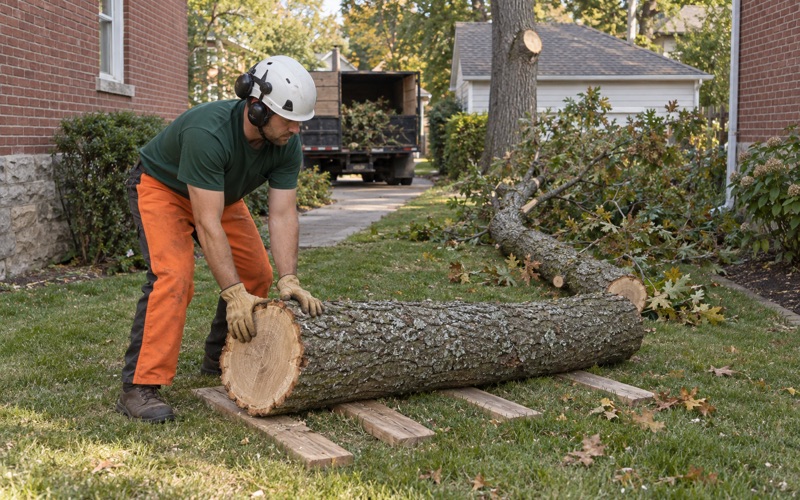
The Anderson County gate accepts by diameter, not just by length. Its Starr construction and demolition landfill takes land clearing debris including vegetation, logs, brush, limbs, roots and stumps, but material 18 inches wide or smaller should be cut 6 feet long or shorter, while material 19 inches wide or larger should be cut 2 feet long or shorter. Starr also does not accept stumps that are two feet high and three feet wide or larger, and a stump pulled from a mature shade tree on one of these old village lots can beat that easily.
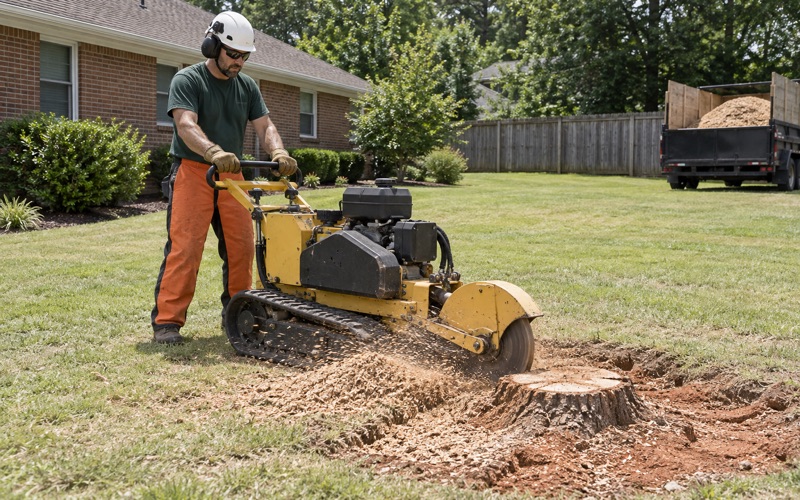
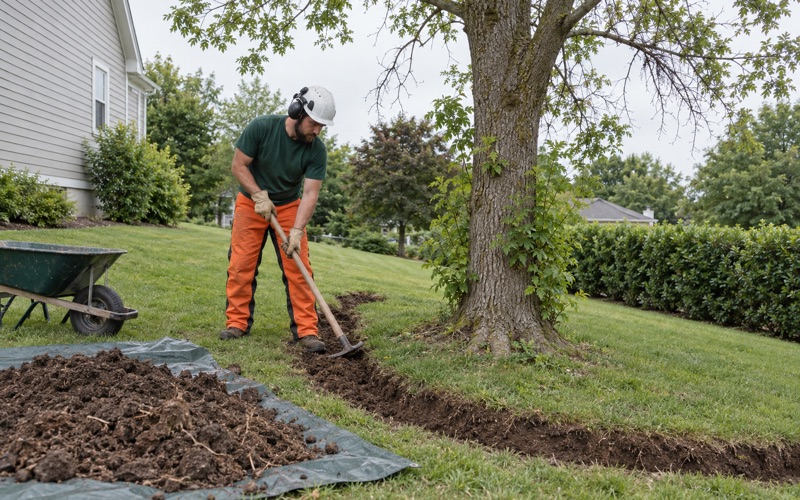
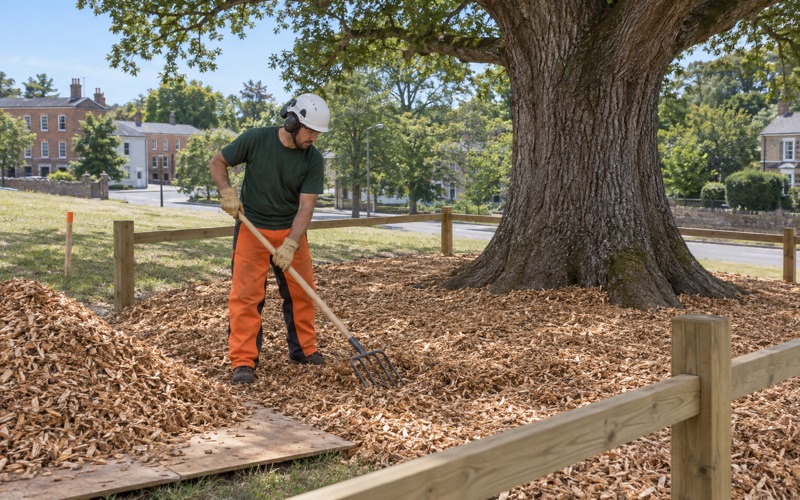
What that adds up to for a customer is simple enough. We cut the wood to the gate that is actually going to take it, we grind stumps on site instead of hauling a stump nobody will accept, and we put the inclusions in writing before we start: the trunk rounds, the stump, the grindings and the chips. If you want the rounds left for firewood or the grindings back in the hole, that is a line on the estimate rather than a conversation on the day.
Village lots and manufactured pads were not laid out for a chipper truck
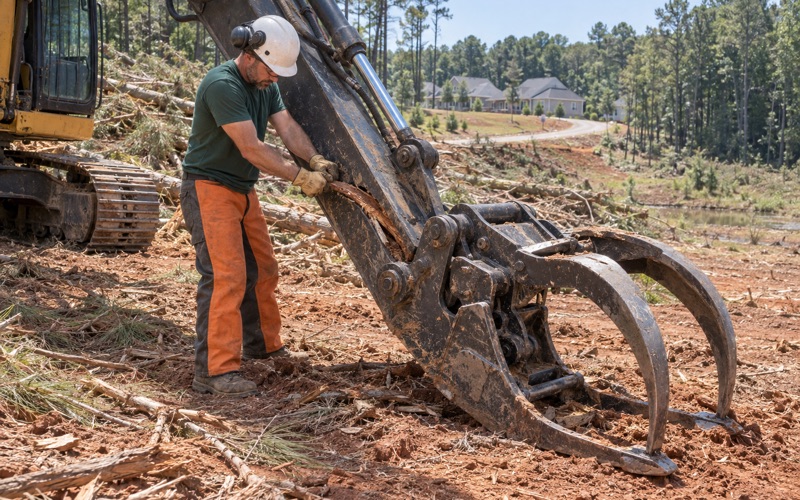
The pre-1940 core of the mill village was laid out for company housing, on small close-set lots with room for a house and a yard and not for a truck with a chipper behind it. Those houses passed into private hands in the 1950s, and the yards behind them were never widened. We work a lot of these jobs with compact tracked equipment that fits through a yard gate, so a back-yard tree does not automatically become a crane job.
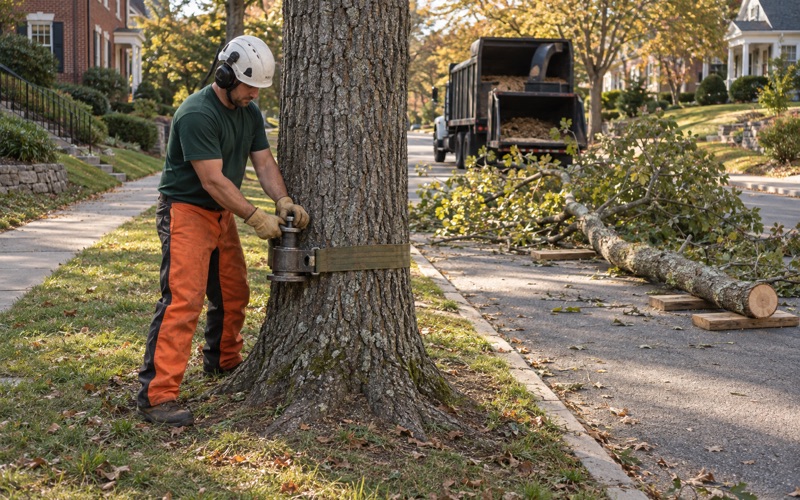
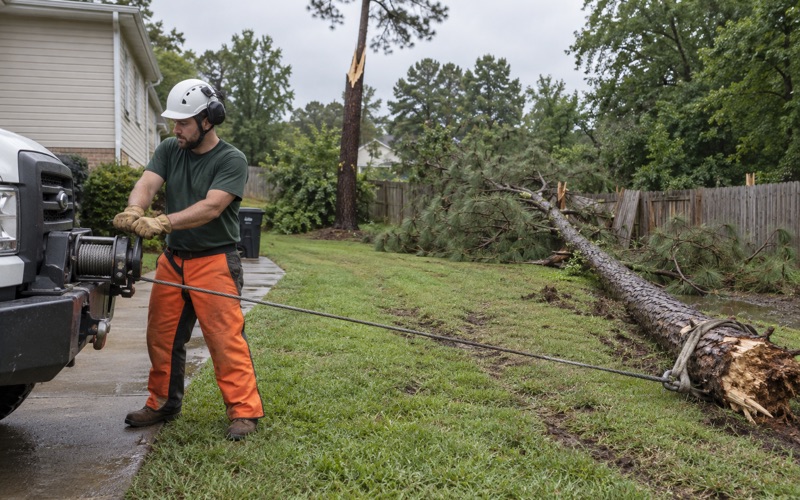
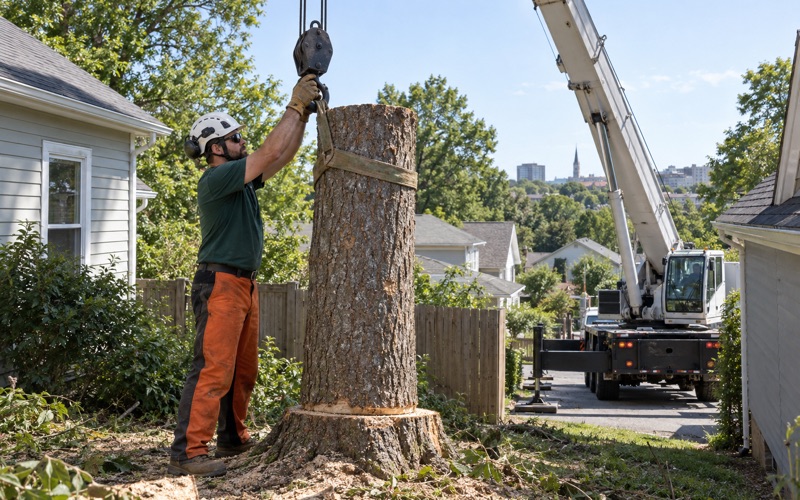
Where the canopy is too big or the drop zone too short, we bring crane and rigging capacity instead of forcing a felling cut. That means a friction lowering device and a rigging block sized to a working load limit we can state, and rigging practice worked to the ANSI Z133 safety requirements, including the weather limits that stop work near energized conductors. A leaning trunk taken down in pieces is also how we keep a stem from barber chairing over a porch roof.
A quarter of the housing here is manufactured
Survey estimates put mobile homes at 26.0 percent of the housing stock here, against 59.4 percent single-unit detached, so roughly a quarter of the work is on a manufactured-home pad. That is its own access problem: narrow lanes, short setbacks, overhead service drops crossing the lane, and not much room to set a chipper or a crane pad. It also changes the risk calculation over the structure, because there is no framed roof deck under a limb that gets away from a rigging line.
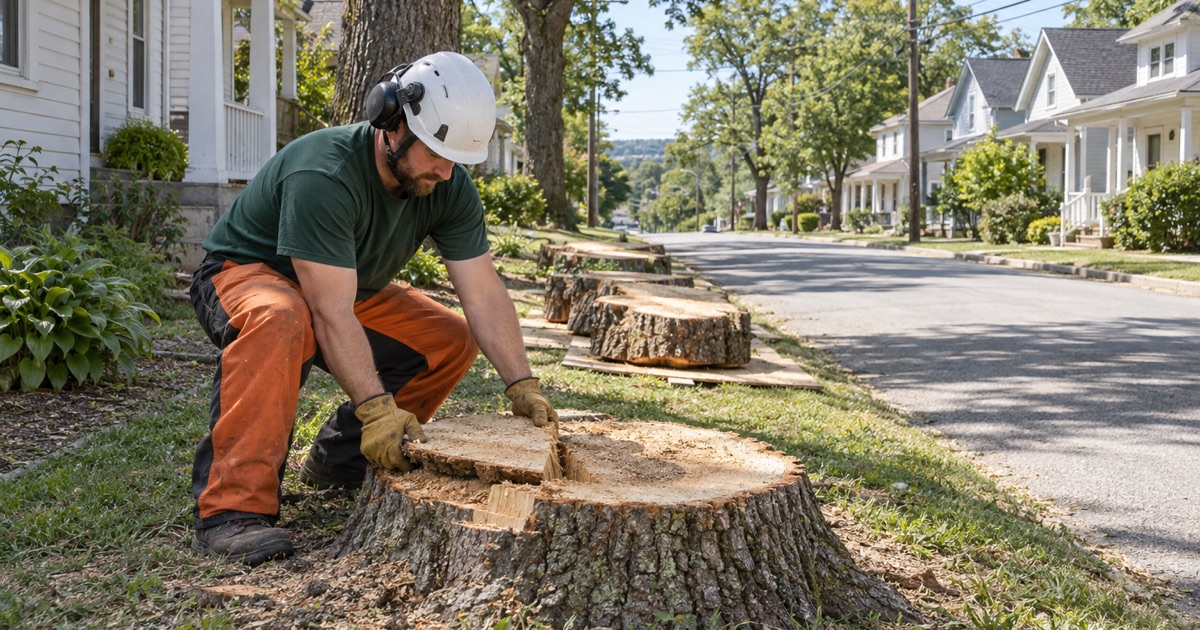
Stump work here runs into the soil rather than the rock. The Cecil and Pacolet soils under this part of the Upstate are described as more than 60 inches to bedrock, well past what a stump grinder is rated to cut, so the machine’s own stop is what limits the grind and not the depth of the hole. What wears on us is the rock fragments in the top horizon, which published descriptions put at 0 to 35 percent, and they take grinder teeth down faster than clean soil does.
No city hall here, so this is who sets the rules
Piedmont is unincorporated in both counties. There is no city council, no city public works department, no city arborist, no municipal tree ordinance and no city brush truck, so every rule that reaches a lot here comes from a county or from a special purpose district. When a customer asks who they need permission from, the honest answer starts with which side of the river the tree is on.
One state rule reaches every lot in Piedmont directly: anyone burning outdoors must notify the South Carolina Forestry Commission first. The commission states that the requirement applies only to unincorporated areas of the state, which is what this place is, and it covers leaves, limbs and branches as well as land clearing burns. If burning is part of your plan for what comes off the lot, that call goes in before the match, and we will tell you when hauling is cheaper than the fire anyway.
The line above the tree belongs to somebody, and not always the same somebody
Which utility owns the wire is not decided by the address. Duke Energy Carolinas is the investor-owned utility across most of this region, and both Blue Ridge Electric Cooperative and Little River Electric Cooperative state service territory that includes Anderson County. More than one of them is plausible at a given service address here, so we read the provider off the meter before we quote anything within reach of a conductor rather than assuming every pole belongs to the same company.
The last thing that shapes this work is what the weather has already done. During Hurricane Helene in late September 2024, the National Weather Service office in Greenville-Spartanburg reported that many trees were uprooted or snapped, Greenville County lost power to roughly 95 percent of customers, and six deaths were recorded in the county, several of them from falling trees. No published source names a species that failed disproportionately, so we assess the tree in front of us rather than working from a list.
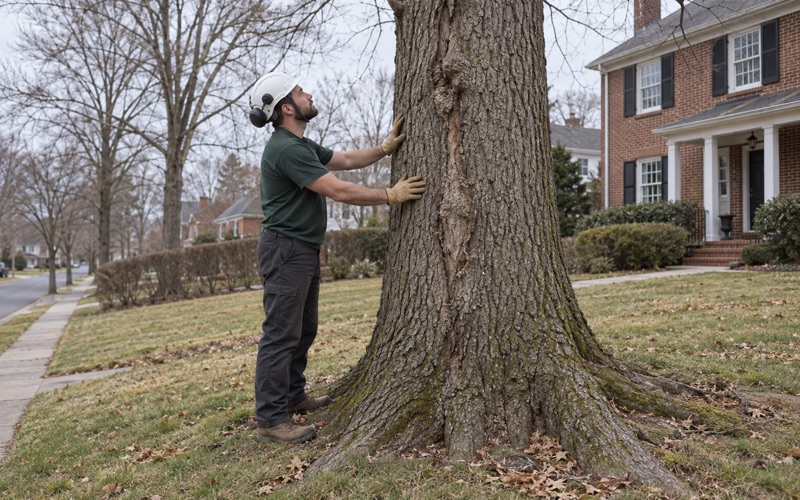
On a standing tree that worries you, we run a Level 2 basic tree risk assessment and write up what we find, including diameter at breast height, root flare condition, co-dominant stems with included bark, and any conk at the base. You get that as a written tree condition report you can hand to a neighbor, an insurance adjuster or an architectural review committee.
Where the answer is not removal, we say so and price the alternative: crown cleaning, crown reduction, or a cabling and bracing setup worked to the ANSI A300 pruning standard, and we do not top trees. South Carolina issues no arborist license and requires none, so instead of calling ourselves something the state does not grant, we tell you what the work actually involves, what the county gate will take, and what it costs to get the wood off your lot.
- 20+ Years in the Upstate
- Free Estimates
- Written Tree Condition Reports