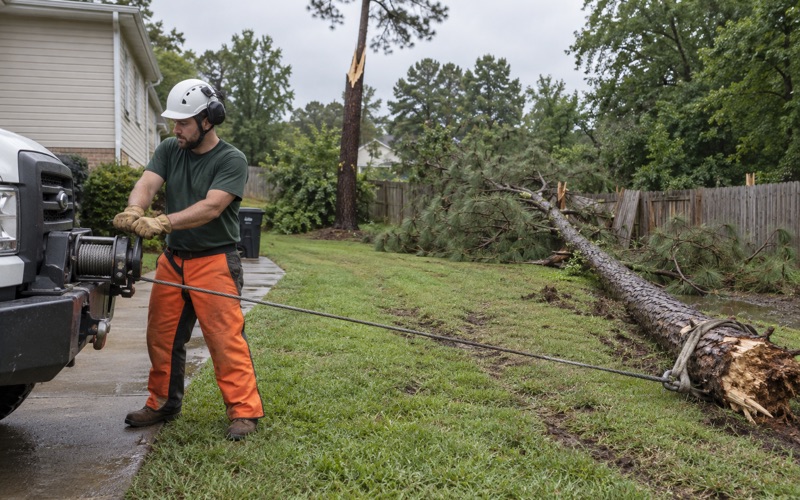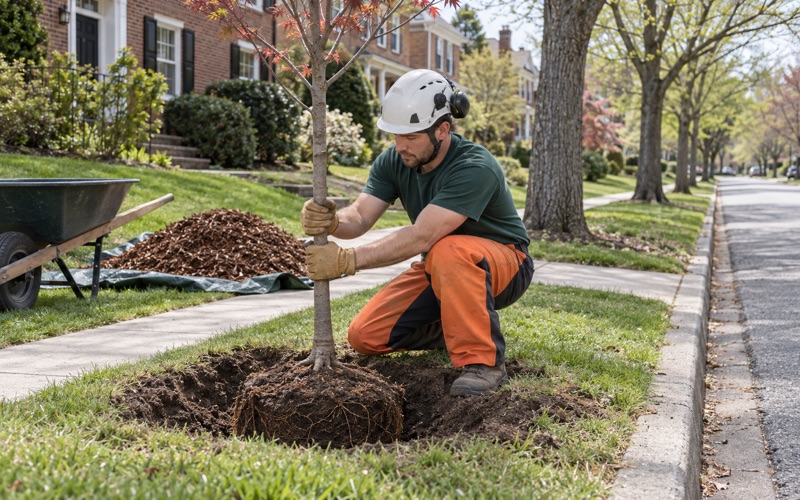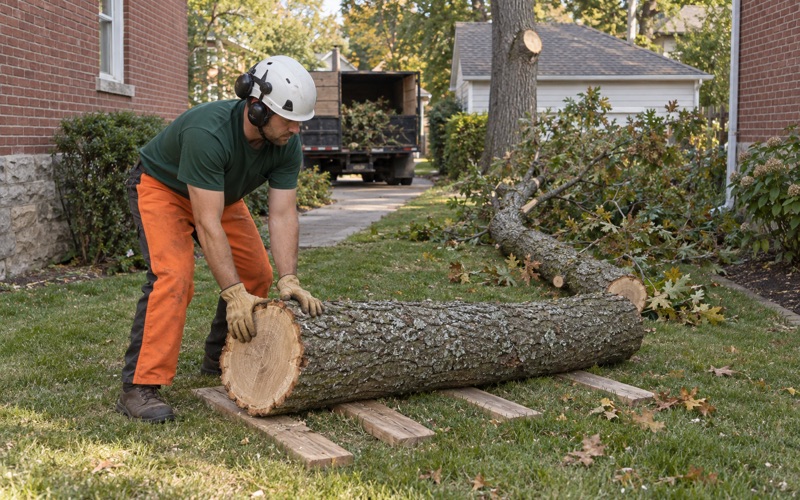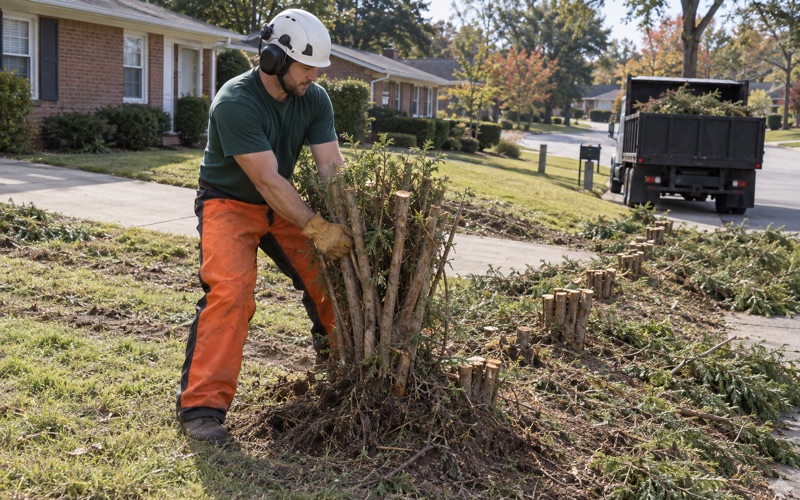
Greenville Tree Removal Team has handled tree removal in Anderson for more than twenty years, and the first question we settle on an Anderson quote is who pays to get the wood off the property. That is not a detail we tack onto the end of an invoice. In this county it is the single line that separates one price from another on the same tree.
Anderson County lets its own residents drop land clearing debris at the county gate for nothing, then publishes the sentence that takes that away the moment anyone is hired to carry it. We would rather show you that sentence before you accept a price than let it turn up as a surprise afterward. Every figure on this page is the county’s or the city’s published number rather than ours.
Our crews have worked the South Carolina Upstate for more than twenty years, across five counties whose rules change at every county line. So we read the ordinance for the city and the county your tree actually stands in before we quote it, and we tell you plainly what this state does and does not ask of a tree crew. Estimates are free, the inclusions go in writing, and you get a straight answer on whether the tree has to come down at all.
The County Gate Is Free Until Somebody Is Hired
Anderson County publishes it in plain words: “Anderson County residents are not charged for C&D and LCD disposal or non-contaminated metal.” The accepted list expressly includes land clearing debris, “Vegetation, clay, soil, sand, gravel, logs, rocks, tree stumps, brush/limbs and roots.” A homeowner who fells a tree, bucks it, loads it and drives it to the county’s landfill at Starr pays nothing at the scale.
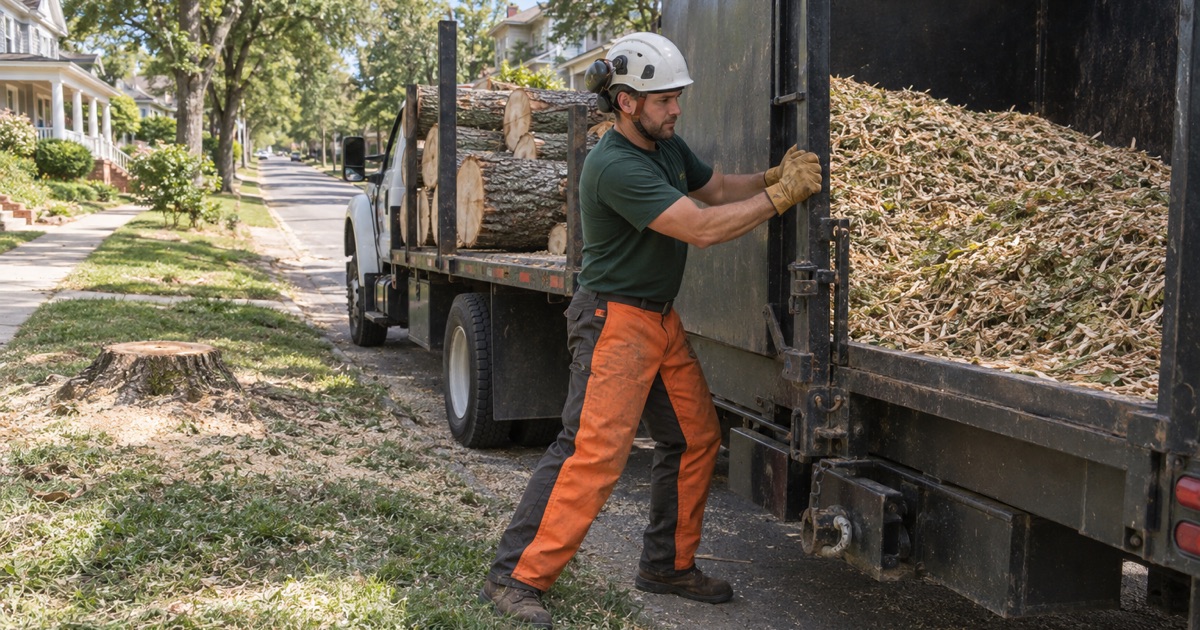
Then comes the sentence that sets the price of a professional job. The county writes that “If a resident pays someone to haul their material to the Starr Landfill, then the person hauling or commercial business will be charged for disposal.” The free gate is a resident’s gate, and hiring a crew turns the same wood into commercial waste.
The Published Commercial Rate
Once the load is ours, the county charges its posted rate for commercial C&D and LCD material, $33 per ton, plus a $20 two-year permit for each commercial truck. That is the county’s published figure and not a surcharge of ours, and it is not something a contractor can talk their way around. The gate is the Starr C&D and LCD Landfill at 390 Roy Arnold Road in Starr.
Because the county charges by weight, the disposal line on an Anderson job tracks tonnage rather than how big the pile looks. A dense hardwood trunk costs more to move than a visually larger heap of light brush, which is why we weigh the wood decision before we quote it.
Leaving the Wood or Hauling the Wood
Because the gate fee follows the wood, we quote the debris as its own line and let you decide. If you want the trunk rounds for firewood, we cut them to a length you can handle and stack them where you ask, and the disposal charge comes off the price. If you want it gone, it rides out on our truck and crosses the scale at the commercial rate.
We write the inclusions down before the saws start: the trunk rounds, the stump, the grindings and the chips. A promise to clean up means four different things to four different crews, and the difference shows up in the price.
Looking for tree-removal closer to Clemson? See Tree-Removal Services in Clemson.
How the Gate Decides the Way We Cut Your Tree
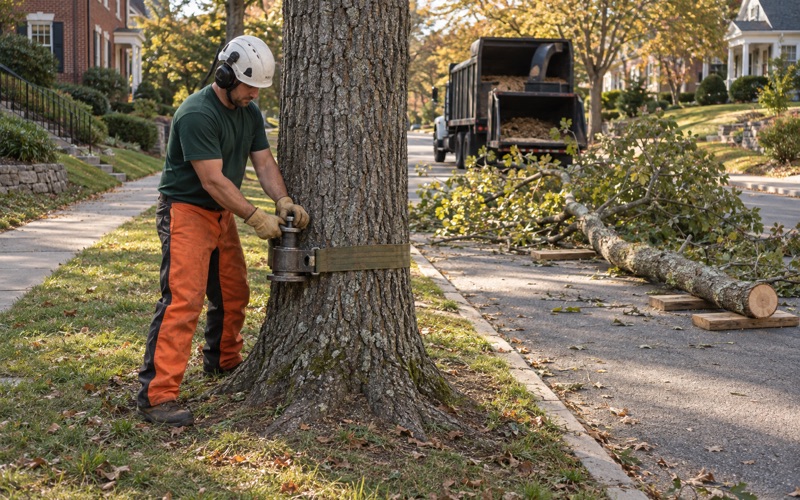
The same landfill also sets the shape of the wood it will take, and the rule runs backward from what most people expect. Anderson County posts two size requirements: “18 inches wide or smaller; should be cut 6 feet long or shorter” and “19 inches wide or larger: should be cut 2 feet long or shorter.” Read together, they say that the thicker the wood is, the shorter it has to be bucked.
A limb fourteen inches across can travel in six-foot lengths. A trunk section two feet through has to come apart into two-foot rounds before the gate will accept it, and that is saw time and handling time priced into the job before anything is lifted. It is a real reason large diameter wood costs more per foot on this ground than small wood does, quite apart from the felling.
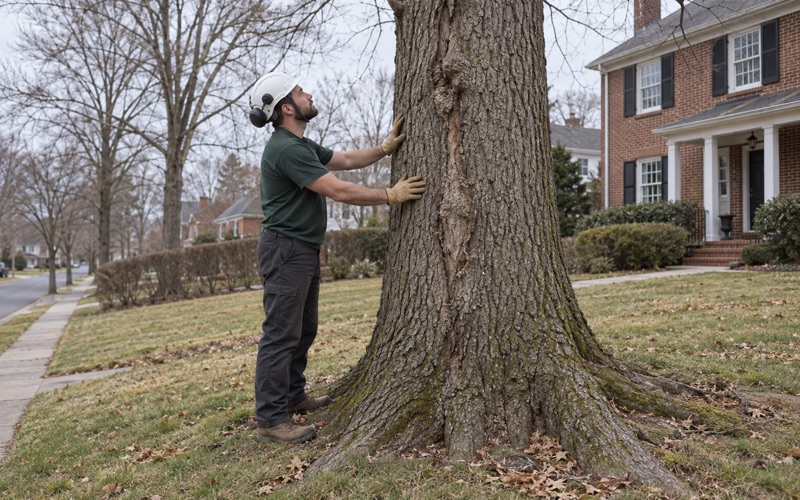
Diameter at breast height tells us how the tree comes down and where the drop zone has to be. The gate ladder tells us how many cuts happen after it is on the ground, which is the half of the estimate homeowners rarely see coming.
The Stump the Landfill Will Not Take
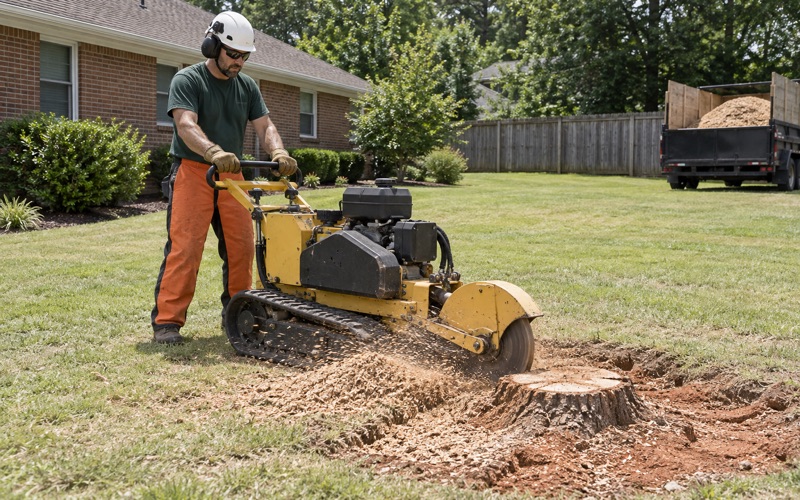
The county draws a hard line at the stump, publishing that “Starr does not accept stumps that are 2 feet high and 3 feet wide or larger.” A large stump pulled whole has no published public outlet in this county, which is the arithmetic that makes grinding in place the ordinary answer here. Full extraction becomes the exception that needs a plan before the machine arrives.
A tracked stump grinder cuts roughly twelve to twenty-five inches below grade, far shallower than these Piedmont soils run before they reach rock, so depth is not the constraint on an Anderson stump. Grit is. The Cecil and Pacolet profiles carry rock fragments that dull teeth, and the Pacolet series commonly sits on slopes of fifteen to twenty-five percent.
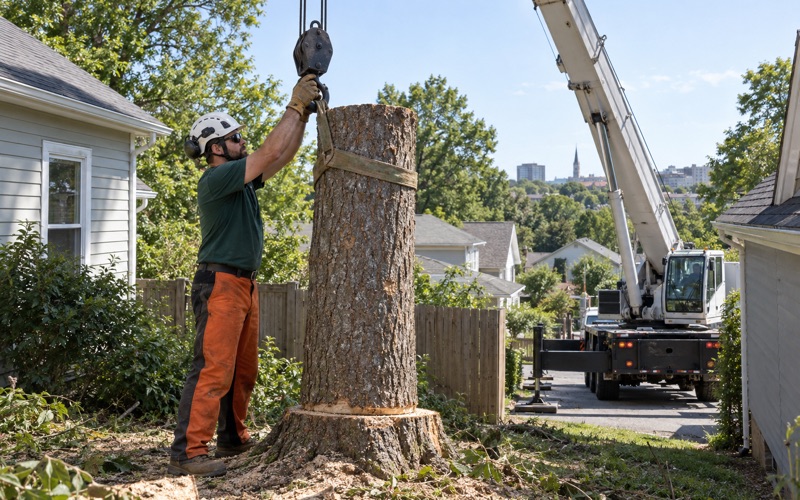
On the older lots cut into those side slopes, what decides access is what the ground does between the street and the tree. Compact tracked equipment gets us through a back yard gate on plenty of them, so a subdivision tree does not automatically become a crane job, though we carry crane and rigging capacity when the reach or the drop zone calls for it. Rigging and any work near energized conductors follows the ANSI Z133 safety requirements, including the weather limits that stop work outright.
The Twelve-Inch Limb the City Curb Will Take
The City of Anderson Sanitation and Environmental Services publishes a vegetative matter rule that is generous in one direction and strict in the other: “Limbs can be no longer 4 feet and no larger than 12 inches in diameter.” A twelve-inch diameter cap admits genuine trunk wood at a residential curb, so most of a small tree qualifies on thickness alone. The four-foot length cap then takes most of that back, because everything has to be bucked short before it will be collected.
Presentation is prescribed as well: “Limbs, brush, and grass clippings can be piled together; do not bag, box, or place in containers; keep free of plastic, garbage, or paper.” The city warns that paper or rocks placed on top of grass clippings will delay or prevent collection.
What the City Page Does Not Say
One limit here is worth stating rather than guessing at. The city sanitation page we read carries no statement either accepting or refusing debris generated by a hired tree service, and a silent document is neither a permission nor a refusal. So we will not tell you the curb takes our brush and we will not tell you it turns it away.
What is written down is the county rule that hiring a hauler ends the free residential gate, and that is what we price the job on. Brush you cut yourself and set out to the city’s dimensions is your material, handled under the city’s rules; the pile our crew makes is ours to move.
The Electric City Does Not Sell Electricity
Anderson is known as The Electric City, and the municipal utilities department carries the name Electric City Utilities. That department supplies water and wastewater only. The city does not sell or distribute electricity, and the name misleads people at exactly the wrong moment.
The wires over an Anderson yard belong to a private company, and the county has more than one. Duke Energy Carolinas is the largest residential electric provider in Anderson County, while Little River Electric Cooperative and Blue Ridge Electric Cooperative also hold territory in the county. Vegetation management practice, right of way width and any offer to de-energize a line on request differ between an investor owned utility and a cooperative, so we identify the provider by service address before quoting anything near a conductor.
Ten Street Segments Where a Front-Yard Tree Needs Approval First
South Carolina has no statewide tree removal permit, and for most addresses in the city we found no removal requirement in the sources we read. That is what the record shows rather than a guarantee, because the answer here is decided by street address and by where the tree stands on the lot.
The City of Anderson operates Heritage Tree Districts covering trees located in the front-yard requirements of ten named street segments. They are Boulevard from North Main Street to Old Williamston Road; West Market Street and West Whitner Street from South Murray Avenue west to the City Limits Boundary; Club Drive and Park Drive in the Linley Park area; North Avenue; North Street from East Greenville Street to Orr Street; North Main Street from Mauldin Street to Whitehall and Concord Road; East River Street from South McDuffie Street to Gossett Street; East Calhoun Street from North McDuffie Street to Wildwood Drive; and South Main Street from River Street south to the City Limits Boundary.
Inside those segments, prior approval from the City is required before a tree subject to the standards may be removed. Two houses a block apart can get different answers, which is why we check the address against the district list before we quote a front yard tree.
The Certificate and the Four Published Grounds
The instrument is a Tree Removal Certificate. The owner applies to the City of Anderson Planning Department at (864) 231-2222, and the Building Official and City Planner decide the request against the standards of the City Zoning Ordinance. If it is approved, the species, size and placement of replacement trees are approved at the same time, so replanting is part of the decision rather than an afterthought.
The city publishes four grounds on which such a tree may be removed: that the tree is damaged or diseased; that it unreasonably restricts the economic enjoyment of the property; that it is too close to buildings or utilities; and that removal is necessary in the interest of public safety and welfare as determined by the City of Anderson and/or the South Carolina Department of Transportation, whichever jurisdiction governs. The second of those is broader than most owners would ever guess was open to them, and it is worth raising before anyone concludes the tree cannot come out.
What to Ask a Tree Crew for Instead of a License
South Carolina issues no arborist or tree contractor license and requires none, so we will never describe ourselves as licensed for this work. What can actually be checked is ISA Certified Arborist credentials and current certificates of insurance, which is what the South Carolina Forestry Commission itself tells homeowners to ask for.
Inside a Heritage Tree District or on an ordinary residential street, we will tell you when a tree can be cabled, braced, or reduced under the ANSI A300 pruning standard instead of taken down, and what each of those costs. We do not top trees. If a neighbor, an insurance adjuster or an architectural review committee needs to see the reasoning, we will put a written condition report in your hands.
- 20+ Years in the Upstate
- Free Estimates
- Written Tree Condition Reports